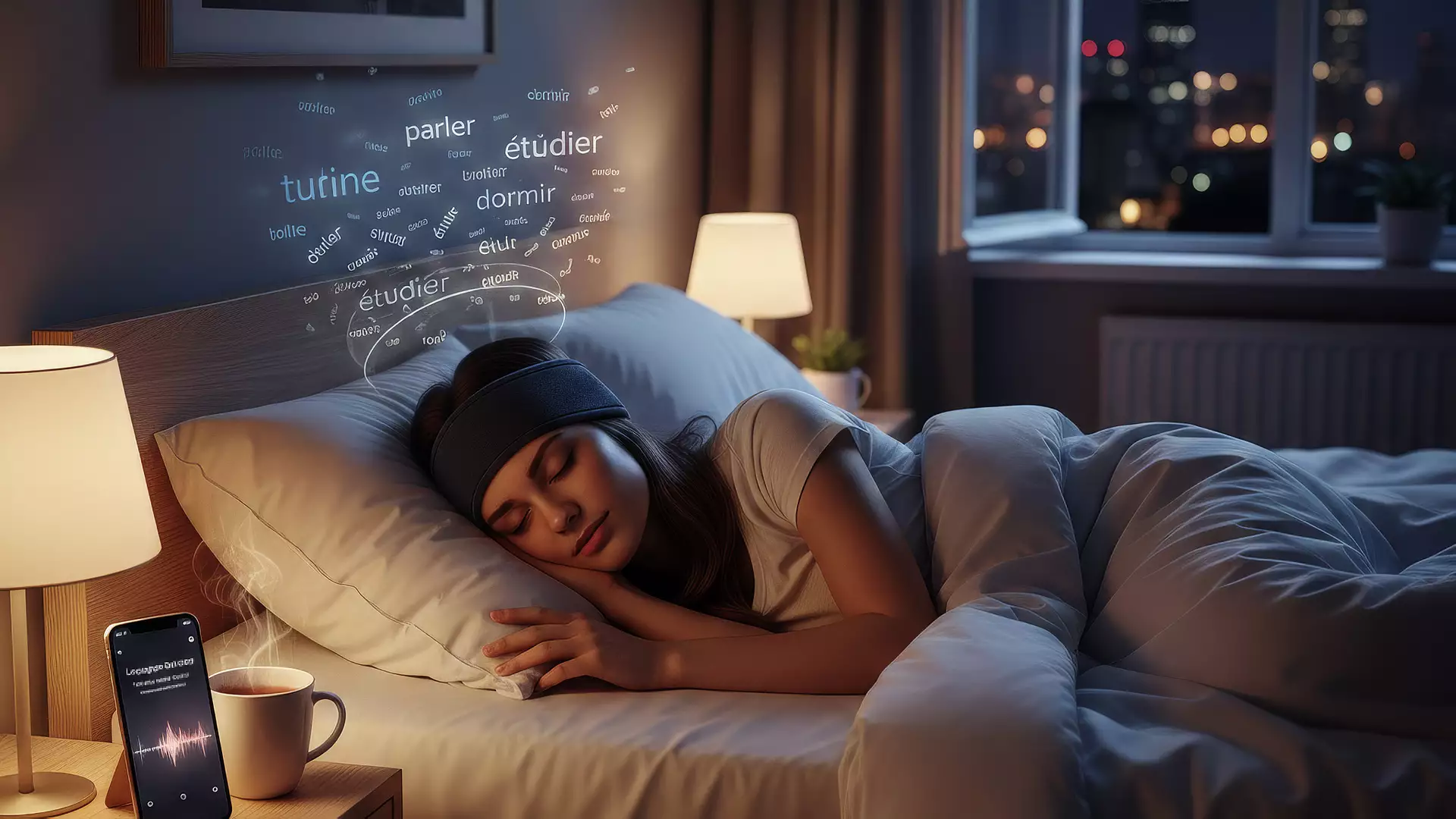
The dream of waking up fluent in a new language after simply wearing headphones overnight is a classic trope of science fiction and late-night infomercials. We’ve all felt the frustration of staring at a textbook for hours, wishing we could just download the data directly into our brains while we rest. While the idea of "passive learning" is often dismissed as a gimmick, modern neuroscience suggests that there is a kernel of truth to the concept. You cannot learn complex Russian grammar from scratch while unconscious, but you can certainly prime your brain to make the "active" study you do during the day significantly more effective.
The science behind this involves how our brains handle memory consolidation. When you sleep, your brain doesn't just shut off; it begins a rigorous process of sorting, filing, and strengthening the neural connections you made during your waking hours. Research, including notable studies from the University of Bern, has shown that the brain remains somewhat permeable to acoustic stimuli during specific sleep cycles. By playing familiar words or phrases at a low volume, you are essentially providing the brain with the raw materials it needs to "replay" and reinforce those memories during REM sleep. This doesn't replace the need for study, but it acts as a powerful glue for the information you've already encountered.
Example Content: Short Stories in Italian on Audible
To make this "sort of" sleep-learning work, you have to bridge the gap between your conscious and subconscious mind. The twenty-minute window right before you drift off is the most critical period for linguistic "priming." During this time, your brain enters a relaxed alpha state, making it highly receptive to new information. If you spend this time reviewing a short story or a specific set of vocabulary in your target language, your brain is far more likely to continue "working" on those specific sounds throughout the night. Even the way you wake up matters; replacing a standard alarm buzzer with a radio broadcast in your target language forces your linguistic centers to engage the moment you open your eyes, shortening the "boot-up" time for your brain.
Setting up your environment for success is a balance of audio quality and sleep hygiene. You shouldn't use high-energy music or aggressive political debates, as these are more likely to spike your cortisol and wake you up than help you learn. Instead, look for "comprehensible input" designed for learners—slowed-down news, bilingual stories where a narrator provides a safety net of English, or simple loops of high-frequency sentences. The volume should be kept just above a whisper, serving as a background texture rather than a focal point. Using specialized sleep headphones, like a soft headband with flat speakers, ensures that you stay comfortable and that the audio stays consistent even if you toss and turn.
Posted on 24th of February, 2026
Blog Posts
Hidden worlds only endangered languages can see
Reveal "invisible" directions, kinship, and landscapes
Improve your language skills effortlessly with personalized, contextual vocabulary and real-time feedback and corrections. Practice naturally through chat-based, real-life conversations, accessible via web and Telegram. Experience efficient AI-powered learning with flashcards for vocabulary building, delivering quick results with minimal effort.